Urgency comes first
Danger signs are checked before payment or a routine queue, with a clear next action when remote care is not enough.
 Download app
Care wherever you are.
Talk to a qualified clinician by secure chat, voice or video and keep your care plan, records and measurements together.
Your health information stays tied to your secure Care ID, not one phone or channel.
Health in your pocket

Why CherryHealth
Smart coordination behind the scenes. A simpler, more human experience in your hands.
Danger signs are checked before payment or a routine queue, with a clear next action when remote care is not enough.
Move between chat, voice and video without losing the conversation, your place or the follow-up plan.
Consent, identity and access are built around each person, even when a family shares one device or account.
Care for real life
From a new symptom to an ongoing condition, start in the same familiar place and let the right care pathway meet you there.
CherryHealth / Everyday care
CherryHealth mobile app
Start care, join a visit, see your records, follow your plan and reach connected services from one simple home screen.
Get CherryHealthDownload for Android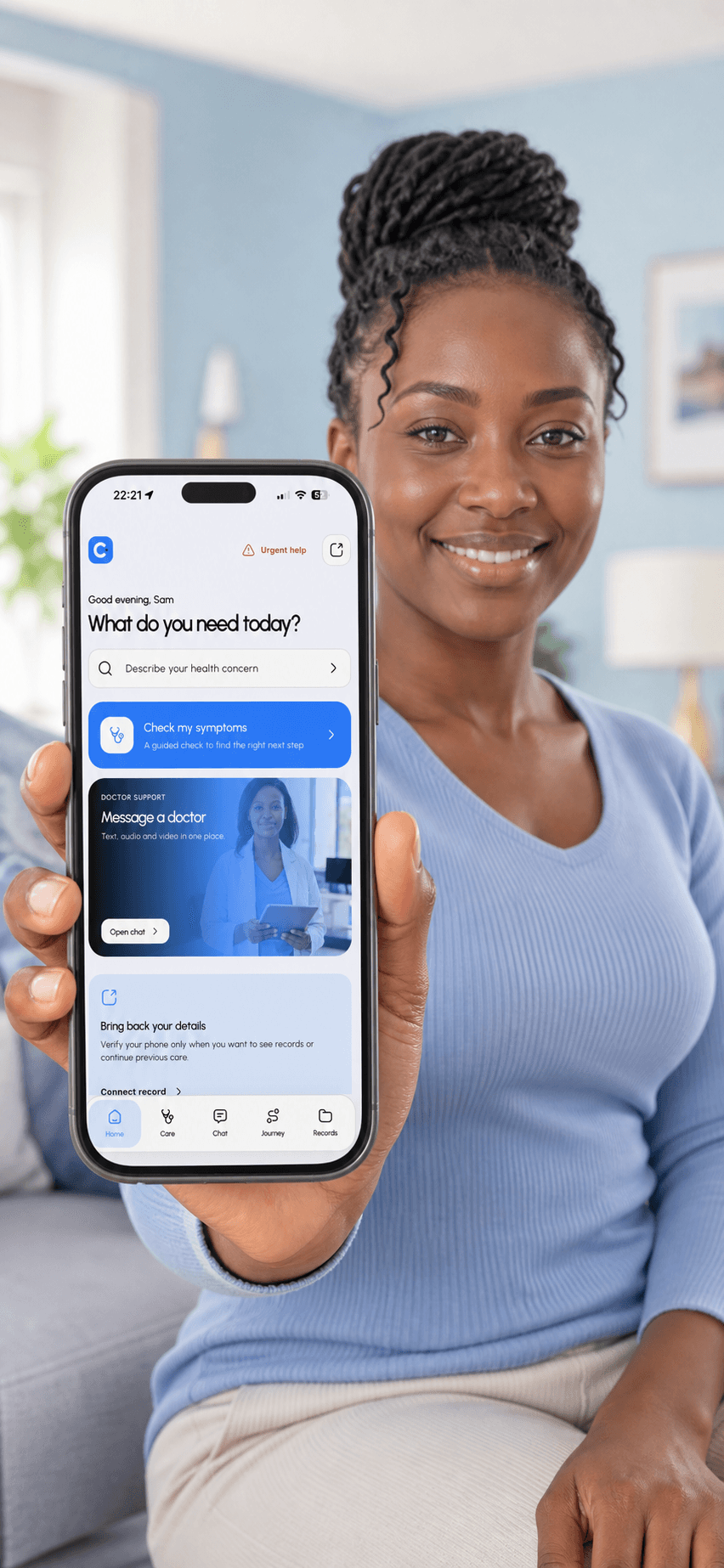
Access that travels with you
Drop from video to voice or chat if bandwidth changes, without losing your place or being charged twice.
Use on-demand care for today or book routine reviews, preventive visits and follow-ups ahead of time.
Keep verified M-PESA or M-Ratiba payments and your active care access linked to your Care ID.
Good to know
The public MVP is available through the CherryHealth Android app in Kenya. SMS is used only for verification and essential service notices.
No. For a life-threatening emergency in Kenya, call 999 or go to the nearest emergency department without waiting for an online consultation.
A consultation can move from video to voice or chat without losing your place, so your clinician keeps the context and you do not have to start again.
Each person receives a separate Care ID, record, consent and entitlement. Household access makes coordination easier without combining one person’s private clinical information with another’s.
No. It helps identify urgency and prepares useful context for care. Clinical decisions remain with qualified professionals, and emergency guidance is never placed behind payment.
A healthier next step